{
“title”: “Built for Power: How Architecture Shapes Political Strategy”,
“meta_description”: “Architecture is more than aesthetics; it is a tool of statecraft. Explore how spatial design influences governance, executive power, and political outcomes.”,
“tags”: [“political architecture”, “strategic design”, “governance”, “urban planning”, “leadership strategy”],
“categories”: [“Geo Politics”, “Civics and Government”],
“body”: “
The Architecture of Authority
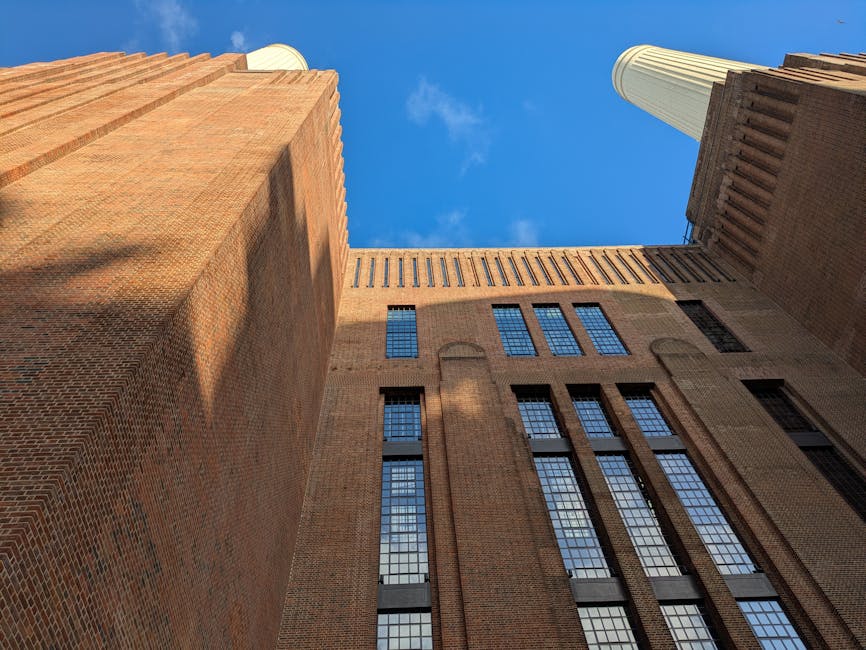
Buildings are silent participants in every political negotiation, policy shift, and assertion of state control. Leaders rarely view their physical surroundings as neutral; they treat them as strategic assets. From the imposing scale of the Pentagon to the circular geometry of deliberative chambers, the built environment dictates the flow of power, the visibility of the state, and the psychological disposition of both the ruler and the ruled. For those engaged in leadership, understanding the spatial dimensions of influence is critical to grasping how systems manifest in the material world.
Spatial Logic and Political Control
The design of a government building often mirrors its underlying political philosophy. Consider the Neoclassical architecture favored by many Western democracies. These structures, characterized by massive columns and grand staircases, are designed to induce a sense of awe—and by extension, submission. They are functional manifestations of strategy designed to project permanence and institutional stability. When an organization or state builds, it codifies its values into stone and steel, creating an environment that forces occupants to behave according to the building’s inherent hierarchy.
The Surveillance of Public Space
Modern political architecture frequently incorporates design elements that prioritize security and surveillance. This is not merely a technical necessity but an operational choice. Open plazas, high-visibility sightlines, and strictly controlled access points are designed to minimize risk while maximizing the state’s ability to observe. This aligns with modern operations, where the objective is to reduce uncertainty through environmental design, ensuring that physical spaces serve as an extension of the state’s reach.
Influence Through Proximity
The layout of a cabinet room or a legislative floor is a masterclass in behavioral engineering. Circular seating arrangements, such as those found in many modern parliamentary buildings, are intended to promote equality and debate. Conversely, the longitudinal layouts common in the British House of Commons force an adversarial posture, physically separating government and opposition. These spatial choices dictate the tempo of decision-making and influence the quality of legislative output. When decision-makers neglect the physical environment, they ignore the subconscious cues that shape human behavior.
Systems as Structural Frameworks
Architecture functions as a physical system, much like an AI algorithm governs data flow. In high-stakes environments, the physical layout of the workplace or the legislative chamber determines which voices are amplified and which are silenced. Leaders who understand the intersection of productivity and environment do not merely inhabit their spaces; they optimize them to suit their strategic objectives. The built environment serves as a foundational constraint or catalyst for political output, influencing outcomes as effectively as any legislative policy or mandate.
Operationalizing Institutional Memory
The preservation of historical sites is a strategic exercise in maintaining political legitimacy. A government that occupies the same halls as its predecessors attempts to inherit the gravity of that history. By leveraging architectural heritage, institutions reinforce their narrative of continuity. This is a common practice across the thebossmind.com network, where we analyze how established entities maintain dominance through the strategic curation of their physical and digital environments.